

As a high-net-worth individual, you probably have a solid grasp on the basics of retirement planning–start early, save as much as you can, take advantage of employer matches, and diversify your investments— all the usual tips. But as someone holding significant assets, you need to look beyond surface-level retirement advice.
High-net-worth individuals face unique challenges and opportunities, and their retirement plans should factor in considerations such as tax optimization, wealth preservation, and legacy planning. With more at stake and the potential for higher tax exposure, developing retirement strategies that go beyond typical planning is essential.
For high-net-worth individuals, planning for a worry-free retirement is about more than just putting money into an account. It requires thoughtful planning and advanced strategies to protect your wealth and financial freedom.
Here are our top five tips for retirement strategies for high-net-worth individuals, guiding you to go beyond the standard approach and enabling you to make the most of your wealth throughout your retirement.
1. Max out your retirement plans
As a high-net-worth individual, you already understand the importance of contributing to retirement accounts. However, you may be able to contribute much more than you think, which can significantly improve your savings potential.
For example, if your company offers an “after-tax” option within your 401(k) plan, you may be able to contribute an additional $46,000 beyond the traditional contribution limits. This opportunity allows you to maximize your retirement savings and build wealth with additional after-tax dollars, even if you didn’t receive an employer contribution.
In addition, business owners have another advantage. By adding a defined benefit plan to their retirement savings strategy, they can potentially contribute more than $200,000 annually. This benefit substantially lowers your taxable income, providing a tremendous tax deduction while boosting your retirement nest egg. The defined benefit plan is a predictable, structured way to save for retirement, allowing business owners to maximize their deductions.
Navigating the complexities of retirement plan options can be challenging, and working closely with a financial advisor is the best way to ensure you’re making the most of the benefits available to you. By taking full advantage of these opportunities, you will be able to put more money away while lowering your tax burden.
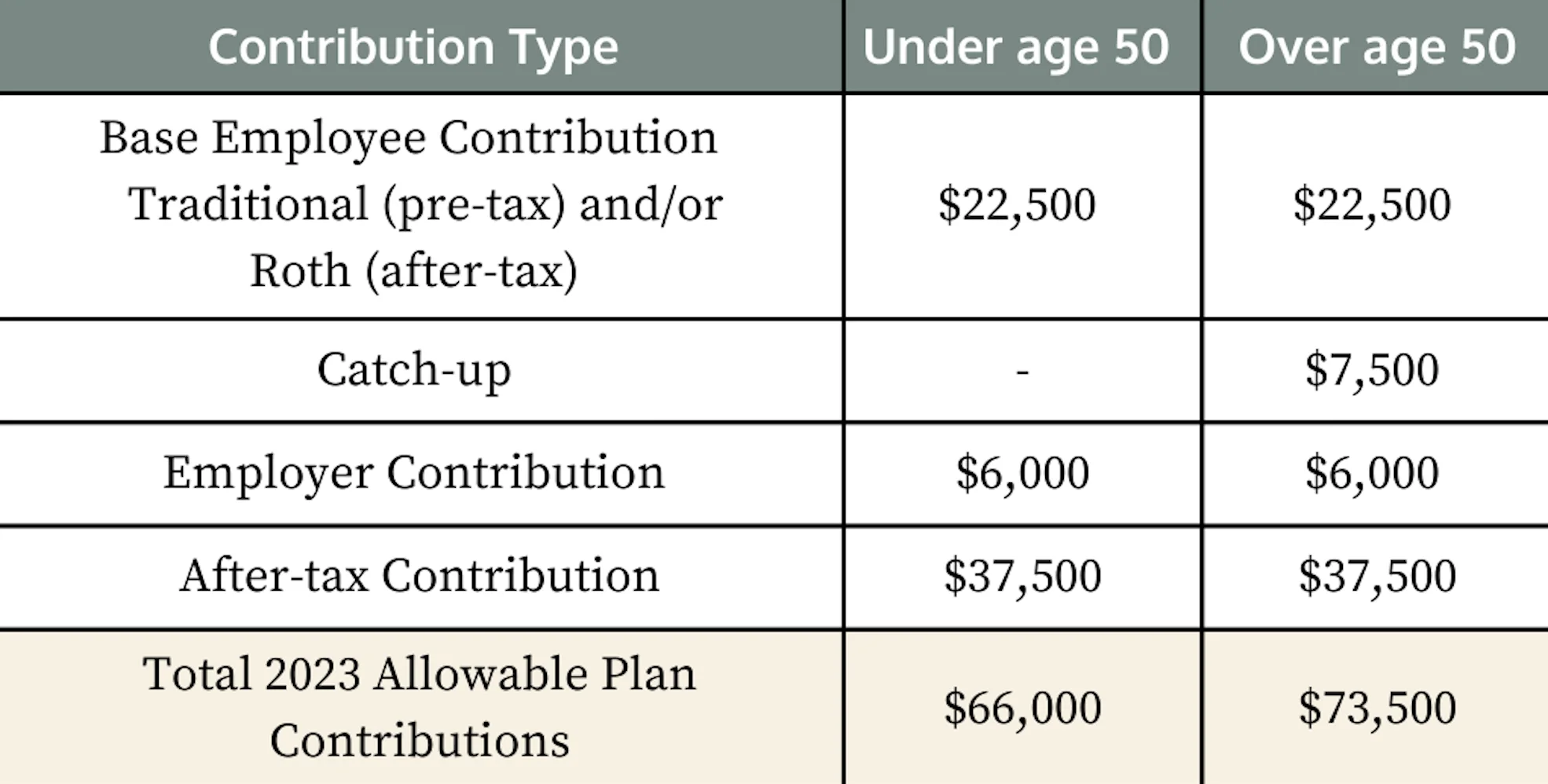
Even if you didn’t receive an employer contribution, you can still contribute up the through your after-tax dollars!
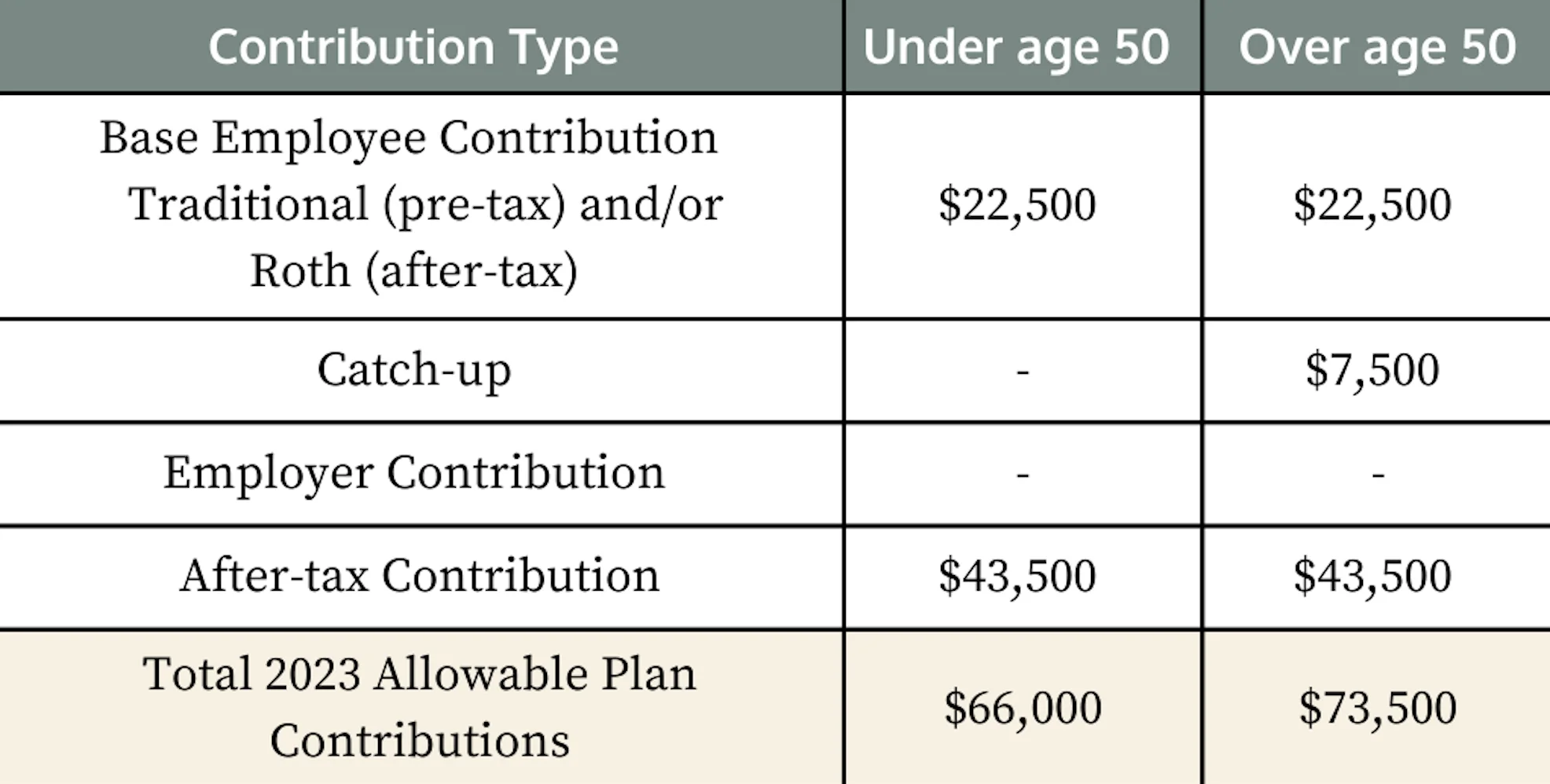
And if you are a business owner, if you added a Defined Benefit plan to your 401(k), you could potentially contribute more than $200,000 towards your retirement plan, providing a significant tax deduction and a tremendous boost to your retirement savings.
2. Redirect taxable income into Roth accounts
There are plenty of reasons why people focus on traditional 401(k)s when it comes to retirement planning. They provide upfront tax benefits and are a valuable way to build wealth. While there is no doubt that traditional 401(k)s are powerful tools for reducing your taxable income and saving for retirement, they aren’t the only accounts you should prioritize.
Many people don’t realize that although 401(k)s reduce your tax liability in the year of contribution, withdrawals are subject to significant taxes. So, for instance, if you need $50,000 during retirement, you may need to withdraw much more than that to account for taxes, which can eat away your retirement nest egg.
By redirecting some of your wealth into Roth 401(k)s and Roth IRAs, you can make tax-free withdrawals, since these accounts are funded with after-tax money. If you are able to build up your Roth, you can create tax diversification because you’ll have another bucket of funds to pull from during retirement. That can provide greater flexibility in retirement planning for high-net-worth individuals.
One strategy to consider is Roth conversions. This involves moving funds from your traditional IRA or 401(k) accounts into a Roth. You will pay tax on the amount you convert, but once it is in the Roth, it will grow tax-free and provide possible tax-free withdrawals.
Another benefit of the Roth conversion is that your beneficiaries will inherit this asset tax-free. With the traditional/pre-tax funds, your non-spouse beneficiaries could be hit with a huge tax bill. If you have a $1 million IRA, they will have to pay the taxes on that money as they take the distributions.
Converting pre-tax money into a Roth can be especially handy in years when your income is lower, like the period between when you retire and when you reach your Required Minimum Distribution (RMD) age. And with the passing of the recent SECURE Act 2.0, this could be as late as age 75.
3. Support your community while reducing your tax bill
For high-net-worth individuals looking to reduce their tax liabilities while making a positive impact, consider charitable giving. Not only are charitable contributions tax-deductible, they can offer significant tax advantages that work with your long-term financial goals.
If you have accumulated a large retirement account, by the time you reach your RMD age, you could be looking at a sizable income tax bill. However, you can reduce this through a Qualified Charitable Distribution (QCD), which allows you to give up to $105,000 of your RMD directly to a charity.
So if your RMD was $150,000, you would only have to pay taxes on $45,000 if you donate $105,000 to your favorite non-profits. You get to reduce your taxes while the organizations you care about get much-needed funds, a win-win!
There are various ways to structure charitable gifts to maximize the impact and benefits of your donations. Consulting with a financial advisor can be a great way to explore your options, helping you to align your charitable giving strategy with your overall retirement plan.
4. Be ready for any outcome: plan for the unexpected
No matter your level of wealth, preparing for unforeseen events is a critical part of retirement planning. Understanding your spending patterns and how these may change in retirement is essential to your long-term financial security.
As you approach retirement, take a look at your expenses and factor in any additional retirement spending you anticipate. It can be difficult to anticipate what you will want to do in life after you retire, but for many, retirement brings new interests, hobbies, and travel plans, all of which add to your budget.
In retirement, you may want to increase leisure spending or make large purchases to enhance your lifestyle. It’s also a good idea to consider potential costs related to long-term care or a move to a senior living community, which could affect your savings. Social security benefits should also be considered as part of a flexible retirement income strategy.
It’s important to plan for different scenarios to ensure your wealth remains protected throughout your retirement. Putting your assets into various income streams, including investments, savings, and real estate, can help create a more resilient financial foundation. For high-net-worth individuals with real estate investments, paying down mortgage debt can also be a strategic step in retirement planning.
It’s also essential to have a contingency plan to help ensure that your retirement stays on track even when life takes its unpredictable twists and turns. Although contingency plans aren’t fun to think about, they provide peace of mind and will help protect your financial health. Preparing gives you more flexibility and control in the event any of the following situations arise:
- Illnesses and accidents
- Early retirement
- Changes in tax laws
- Death of a partner
- Market declines
A flexible retirement strategy is a key way to protect your finances from unexpected outcomes. For example, a mix of liquid and growth-oriented assets can help you avoid drawing down too heavily on one asset class, which can protect your portfolio during economic downturns. A knowledgeable financial advisor can offer insights on building a resilient portfolio and help you develop contingency plans so you can enjoy retirement the way you want.
5. Regularly revisit your plan
For high-net-worth individuals, your retirement plan isn’t a fixed playbook. It’s not something you can “set and forget.” Over the years, your life will change. Your estate planning and retirement strategies should be updated to reflect those changes.
Major life events, such as marriage, the birth of children or grandchildren, and divorce may require changes to your retirement strategy, and to make the most of the long-term benefits of your plan, you must reassess it regularly. As life changes, you may need to add or remove beneficiaries to your will and life insurance policies to ensure your assets go to the right people in the event of your death.
Another factor to consider is that your retirement goals may evolve over time. As new priorities and interests emerge, you may want to change your retirement strategy. Whether it’s retiring early, downsizing your living situation, or leaving a larger legacy to your family, revisiting your retirement plan regularly can help you stay on track.
Financial advisors stay informed about potential tax advantages, new investment opportunities, and strategies that can help you make the most of your retirement income. In general, it’s a good idea to revisit your retirement plan with your financial advisor at least once a year. As you approach retirement, you may want to increase that to two or three times per year. Going from paychecks to portfolio income is a big change, and you’ll want to feel confident about the transition ahead.
Plan Your High-Net-Worth Retirement With Confidence
For high-net-worth individuals, there is a lot to consider during every stage of the retirement planning process. From capital gains and tax strategies to legacy planning and charitable giving, making the right moves throughout retirement requires careful planning.
With so many moving parts involved in high-net-worth retirement strategies, working with a financial advisor at Team Hewins can be the best way to make sense of your options and maximize your opportunities. We’re with you every step of the way, going beyond creating a sound retirement plan to helping you stay on top of life changes and market swings to bring you peace of mind so you can enjoy retirement to the fullest.
Plan your future with confidence by exploring retirement strategies for high-net-worth individuals with a financial advisor at Team Hewins. To discuss your current finances, start building your retirement plan, or learn more about what we offer, reach out today to set up a complimentary 15-minute introductory call.
Team Hewins, LLC (“Team Hewins”) is an SEC-registered investment adviser; however, such registration does not imply a certain level of skill or training, and no inference to the contrary should be made. We provide this information with the understanding that we are not engaged in rendering legal, accounting, or tax services. We recommend that all investors seek out the services of competent professionals in any of the aforementioned areas. Certain information provided herein is based on third-party sources, which information, although believed to be accurate, has not been independently verified by Team Hewins. Team Hewins assumes no liability for errors and omissions in the information contained herein. Certain information contained herein constitutes forward-looking statements. Team Hewins does not guarantee the achievement of long-term goals in the portfolio review process. Past performance is no guarantee of future results, and a diversified portfolio does not guarantee a positive outcome. Nothing contained herein may be relied upon as a guarantee, promise, assurance, or a representation as to the future.